
Safety · July 30, 2026 · 8 min · By Quiana Bellweather
The anesthetic ceiling: why your surgeon limits areas in one session
When a surgeon says you cannot do the abdomen, flanks, back and thighs on the same afternoon, the reason is rarely stamina. It is a milligram number that scales with your body weight, and you can reconstruct your own ceiling from figures that are already published.
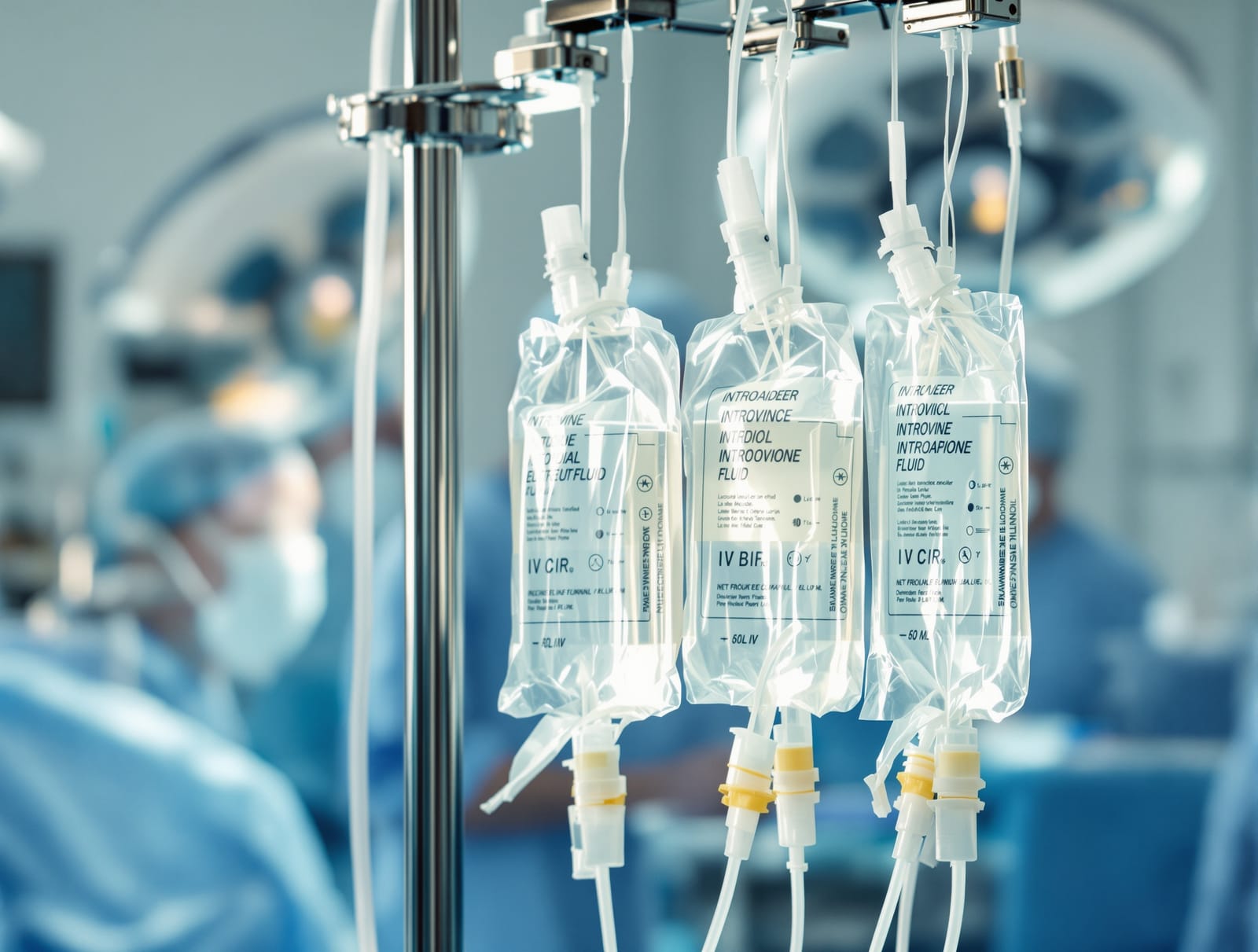
Somebody comes in with a list. Abdomen, both flanks, the bra roll, inner thighs, and while we are at it the arms. They have budgeted for one recovery and one round of time off work, and they would like all of it done at once. The surgeon listens, then says they will do two of those areas now and the rest at a second sitting, and the patient hears a sales tactic.
It is almost never a sales tactic. There is a hard number sitting underneath that answer, and the reason patients do not recognise it is that nobody shows them the arithmetic.
The original element in this piece is a walkthrough that lets you reconstruct your own tumescent anesthetic ceiling from your body weight and from dose figures that are already in the published literature, plus the four questions that turn it into a real conversation at consultation. The pharmacology is not secret. What is missing everywhere is the patient facing version, which is the version that explains why the answer to how much can be done today is a number about you rather than a number about the clinic's schedule.
What tumescent actually means. Liposuction under local anesthesia works by infiltrating the fat with a large volume of very dilute lidocaine, usually with epinephrine and buffered with bicarbonate. The tissue becomes firm and swollen, which is what tumescent describes. The dilution is the whole trick. Lidocaine delivered this way, into fat, with epinephrine constricting the vessels, is absorbed far more slowly than the same drug injected into a well perfused tissue, and peak blood levels arrive many hours after the operation rather than during it.
That slow absorption is why the safe dose in this setting is far higher than the dose you would ever give by ordinary infiltration. It is also why the ceiling exists at all. The drug is still going in. It is simply going in slowly, and it will keep being absorbed while you are at home on the sofa that evening.
Where the number comes from. The pharmacokinetics of tumescent lidocaine have been studied specifically because the doses looked alarming to anyone trained on conventional limits. Work measuring lidocaine levels through the hours after infiltration established both the delayed peak and the effect of infiltration speed on it (Dermatol Surg 1999), and the technique and its dosing have been reviewed repeatedly in the surgical literature since (Clin Plast Surg 2013, The Surgeon 2013).
The figure that emerged is expressed as milligrams of lidocaine per kilogram of body weight, and it is roughly an order of magnitude above the conventional local anesthetic limit. Different sources give slightly different ceilings and different degrees of caution, which matters and which we will come back to.
Doing your own arithmetic. Take your weight in kilograms. If you think in pounds, divide by 2.2. Multiply by the per kilogram figure your surgeon uses. That product is your total lidocaine allowance for the session, in milligrams.
Now convert it into something meaningful. Tumescent solution is typically made at around 0.05 to 0.1 percent lidocaine, which is 0.5 to 1 milligram per millilitre. Divide your total allowance by that concentration and you get the volume of tumescent fluid that can be infiltrated. Then remember that each treated area needs enough fluid to make it genuinely firm, which for a large area is a substantial volume in its own right.
Follow it through and the constraint becomes obvious. A smaller person has a smaller allowance and therefore fewer areas per session, which is exactly the opposite of the intuition that a smaller person is an easier case. Two people asking for the same list of areas can get different answers for reasons that have nothing to do with either of them personally.
The four questions to ask. First, what per kilogram limit do you work to, and is that for tumescent under local or for a case done under general anesthesia. The two are different conversations, because the ceiling logic changes when the local is an adjunct rather than the anesthetic. Second, what concentration is your tumescent solution. Third, given my weight, what total volume of tumescent does that allow. Fourth, given that volume, which of my areas fit into one session and which do not.
A surgeon who can answer all four without reaching for anything is a surgeon who thinks in these terms routinely. That is the actual point of asking, and it belongs in the same category as the other questions worth taking to choosing who operates on you.
What the studies do not tell you, and where sources disagree. This is the part that gets flattened in most patient material. The commonly cited maximum for tumescent lidocaine sits well above the traditional limit, but the published figures are not unanimous, and the range between the more permissive and the more conservative recommendations is wide enough to change how many areas you can have treated. The higher figures derive substantially from case series in patients who were otherwise healthy, having pure tumescent liposuction, without general anesthesia and without other drugs competing for the same liver enzymes.
That last point is the one to carry into the room. Lidocaine is cleared by hepatic metabolism, and a number of ordinary medications slow it. Anything that reduces clearance shifts the whole curve, and the ceiling that applies to a healthy person taking nothing does not automatically apply to you. There is no published dosing table that adjusts for each interacting drug in this setting. What exists is the general pharmacology and a recommendation to be conservative, which is a genuine gap and should be described as one.
The practical upshot is that the honest answer to how much can be done in one sitting is a range that narrows once someone knows your weight, your medications and your health. Anyone who gives you a confident number before asking those things is not doing the calculation.
Why this is worth understanding rather than delegating. Because it reframes the second session. A staged plan is not a clinic maximising revenue. It is the visible consequence of a dose limit, and once you can see the limit you can plan around it deliberately, choosing which areas matter most for the first sitting rather than negotiating for all of them. It also connects to the volume side of the same problem, since how much fat can safely be removed has its own ceiling running in parallel with this one, and to the practical question of what a session actually costs, because two sessions priced separately is the predictable consequence of a limit that was there from the start.
The single most useful sentence you can say at a consultation is this. Given my weight and your solution concentration, what does my lidocaine allowance let us treat today. It moves the conversation from wishlist to arithmetic, and the arithmetic is on your side.